

How to fix damaged skin barrier

There is a very specific kind of panic that sets in when even plain lukewarm tap water makes your face sting like a swarm of wasps.
If you’re currently reading this with a bright red, tight, peeling mug, sitting on the sofa wondering if you can somehow cool your cheeks down with a bag of frozen peas, take a deep breath. You haven’t ruined your face forever. You’ve just managed to obliterate your skin barrier - and trust me, almost all of us have done it at least once in the pursuit of that elusive, glossy “glow” we’re constantly sold online.
Whether you overdid the glycolic acid, fell down a ten-step serum rabbit hole, or simply let harsh winter winds and central heating ravage your cheeks, figuring out how to fix damaged skin barrier issues doesn’t require a £200 dermatologist visit. It requires hitting the panic button on your current routine, stripping everything right back to raw basics, and feeding your skin something it actually recognises.
Grab a lukewarm cup of tea, leave the ice pack on the counter, and let’s talk about how to get your face back on speaking terms with you.
First Off: How Did Everything Go So Horribly Wrong?
To understand how to fix damaged skin barrier damage, it helps to picture what your barrier actually is.
Think of your outermost skin layer (the stratum corneum, if we’re being proper) like a tiny brick wall. Your skin cells are the bricks, and natural fats - lipids, ceramides, and fatty acids - are the mortar holding them together. When that mortar is intact, moisture stays trapped inside, and irritants, bacteria, and harsh environments stay out.
When you over-exfoliate, slather on harsh alcohol-based toners, use strong retinoids, or wash your face with water hot enough to boil a potato, you scrape away that mortar.
Suddenly, your brick wall has gaping holes in it. Moisture escapes at lightning speed, leaving you dry and flaky, while everyday things - like dust, mild soaps, or even a soft breeze - get straight inside and cause utter chaos.
The Tell-Tale Signs Your Barrier is Screaming for Help:
-
The "Plain Water" Burn: Anything you put on your face - even gentle water - causes a sharp, hot sting.
-
Paradoxical Oiliness: Your face feels dry, tight, and stretched like a drum, yet somehow looks greasy an hour later as your skin desperately tries to produce oil to protect itself.
-
Sudden Sensitivity: Products you’ve used for years suddenly make you flush bright crimson.
-
Rough, Sandpaper Texture: Tiny, angry dry patches and texture that no amount of scrubbing seems to fix (and please, for the love of goodness, stop scrubbing).
The 4-Step Protocol: How to Fix Damaged Skin Barrier Disasters
When your barrier is properly broken, throwing more bottled products at it is like trying to put out a bonfire with kerosene. The golden rule here is radical simplicity.
Here is the exact step-by-step roadmap to nursing your skin back to health.
Step 1: Declare an Absolute Skincare Moratorium
Put down the acids. Put down the scrubs. Put down the vitamin C, the retinoids, the pore strips, and that fancy scented night mask you bought off Instagram at midnight.
For the next two to three weeks, your routine is going down to the bare minimum: gentle cleansing and deep, non-irritating moisture. That’s it. If a bottle claims to "resurface," "brighten," or "peel," shove it into the back of your bathroom cabinet where it can’t tempt you.
Step 2: Wash with Lukewarm Water (and Ditch the Foams)
Hot water is an absolute thief when it comes to skin lipids. When washing your face, stick strictly to lukewarm or cold water.
If you must use a cleanser at night to get the day off, make sure it is completely non-foaming, fragrance-free, and sulphate-free. Foaming cleansers rely on harsh surfactants that strip whatever precious little lipid mortar you have left. In the mornings? Skip the cleanser entirely and just splash your face with cool tap water.
Step 3: Rebuild the Mortar with Bio-Identical Lipids
This is where standard water-based lotions usually fail us. When your skin barrier is thoroughly trashed, conventional moisturisers filled with emulsifiers, synthetic preservatives, and artificial scents will just irritate those open "brick wall" gaps further.
To actually repair the wall, you need pure, dense fats that mimic the natural lipids your skin just lost.
This is why grass-fed beef tallow is unironically the ultimate barrier-repair secret weapon. Tallow has a lipid structure that is almost identical to human sebum. When you press pure tallow onto a broken skin barrier, your skin doesn't treat it like a foreign chemical invader - it recognises it instantly as familiar, soothing skin food.
-
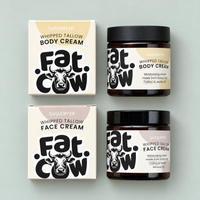
Nutrient-Dense Repair: Our Fat Cow Unscented Whipped Tallow Cream is loaded with bio-available vitamins A, D, E, and K, alongside conjugated linoleic acid (CLA). These fat-soluble nutrients penetrate deep to soothe inflammation and physically rebuild that compromised moisture seal.
-
Zero Irritants: Unscented tallow contains zero synthetic fragrances, zero harsh chemical preservatives, and zero water fillers. It gives your skin a pure, protective shield so it can heal underneath without distraction.
Step 4: Lock Moisture into Damp Skin
Tallow is an incredible occlusive and emollient, meaning it seals in hydration and softens the skin. To get the absolute most out of it, never apply it to bone-dry skin.
After washing your face with lukewarm water, gently pat it with a towel so it's still slightly damp. Take a tiny pea-sized blob of unscented tallow cream, warm it up between your palms until it melts, and gently press (don't rub!) it onto your cheeks, forehead, and neck. Applying it to damp skin traps that surface moisture right underneath a rich, nourishing lipid blanket.
What NOT to Do While Your Barrier Heals
While you're waiting for your skin to calm down, a few minor slip-ups can set your progress back by weeks. Here is your cheat sheet of things to avoid:
-
Don't Scrub Away the Flakes: It is endlessly tempting to use a washcloth or face scrub to buff away those dry, flaking bits. Resist the urge! Those flakes are your skin's makeshift band-aids. Scrubbing them off just rips open fresh, unhealed skin underneath.
-
Avoid "Natural" Essential Oils for Now: Essential oils like lavender, tea tree, or eucalyptus are lovely in small doses when your skin is healthy, but on a raw, damaged barrier, they can be highly sensitising. Stick strictly to unscented products until your face feels robust again.
-
Keep Off the Piping Hot Showers: I know, a scorching hot shower at the end of a long day is bliss. But letting steam and boiling hot water blast your face for ten minutes straight will completely reset your healing timer back to zero.
How Long Does It Actually Take to Heal?
I wish I could tell you that your face will be 100% back to normal by tomorrow morning, but real barrier repair requires a tiny bit of patience.
Generally, skin cell turnover takes around 28 days. If your barrier damage is mild, you’ll likely feel massive relief—no more stinging, less redness—within 3 to 7 days of using pure tallow on damp skin. However, to fully rebuild that brick-and-mortar structure, stick to your simplified, single-origin routine for a full month.
Once your face stops burning, feels soft to the touch, and can handle plain water without throwing a fit, you’ll know your barrier is back in business.
Less Stuff, Better Skin
If your journey down the modern skincare aisle left you with a burnt barrier and a empty purse, consider this your permission slip to stop trying so hard. Your skin doesn't need a complicated chemistry experiment to look and feel good—it just needs simple, nutrient-dense ingredients that work with its natural biology rather than against it.
Strip back the routine, feed your barrier pure grass-fed tallow, and give your skin the quiet, undisturbed space it needs to mend itself.
 Back to blog


